
Before It Was the Gaslamp: New Town, the Stingaree and San Diego’s Wild Downtown History
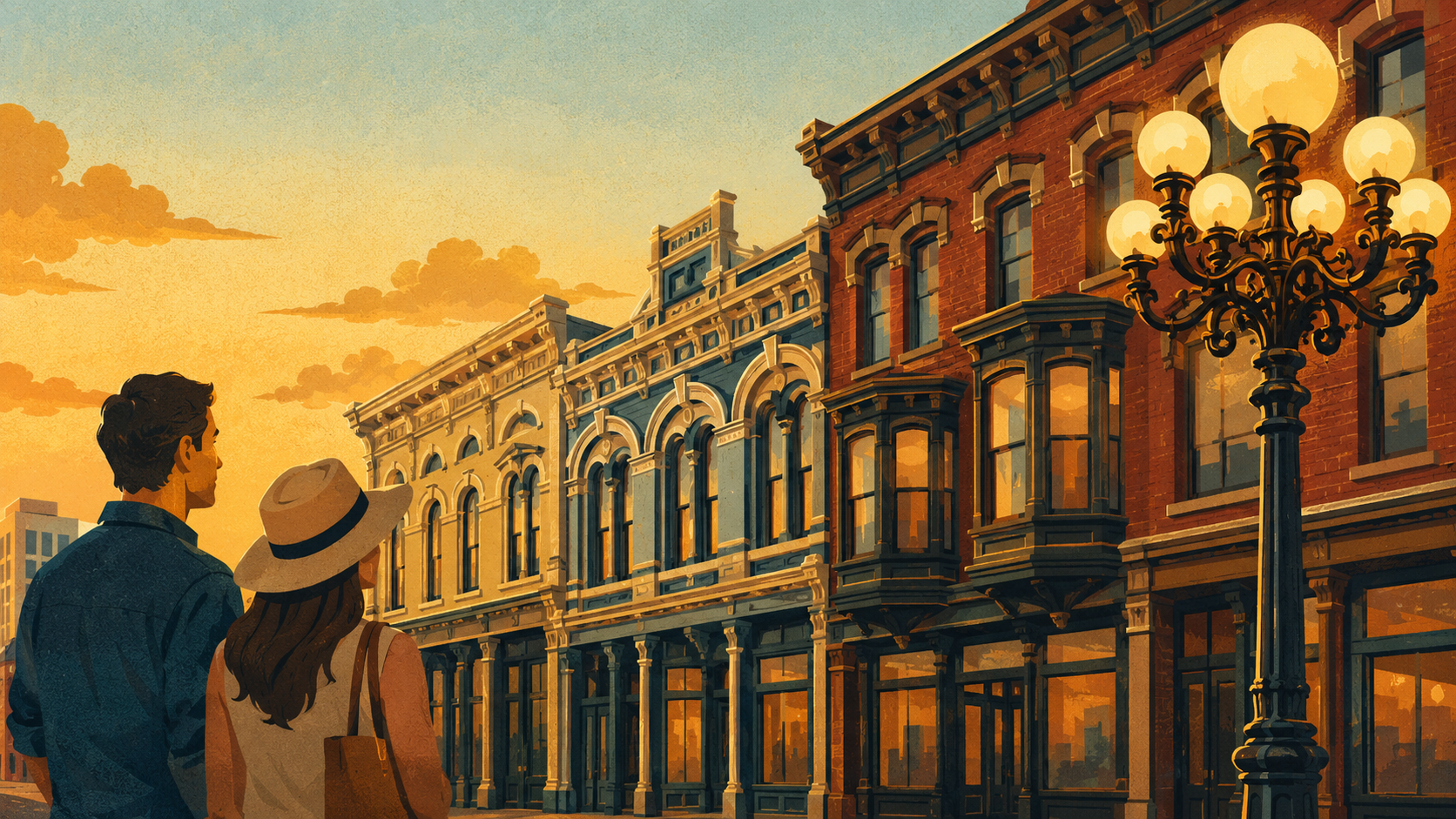
Before the Gaslamp Quarter became San Diego’s famous dining and nightlife district, it cycled through big dreams, a waterfront land gamble, boomtown ambition, saloons, gambling halls, reform campaigns and an enormous preservation project. The neighborhood has never lacked plot.
Its story begins with New Town in 1850, accelerates when Alonzo Horton bets on a downtown near the bay, and gets considerably rowdier during the era remembered as the Stingaree. San Diego Crawling explores this layered past where it happened, but first it helps to understand why a few downtown blocks contain so many stories.
A house arrives before the neighborhood is ready
In 1850, William Heath Davis tried to establish a settlement closer to San Diego Bay than Old Town. He called it New Town and invested in a waterfront wharf, streets and prefabricated houses shipped from Maine.
One surviving house now stands at Fourth Avenue and Island Avenue. The Gaslamp Museum at the Davis-Horton House identifies it as downtown San Diego’s oldest surviving structure. It traveled around Cape Horn in pieces before being assembled in New Town, which is a fairly dramatic commute for a building.
Davis’s development stalled, but the little house stayed. Today it gives the neighborhood a physical starting point, complete with walls, rooms and an ocean-crossing origin story.
Alonzo Horton makes a waterfront bet
New Town found its second champion in 1867. Alonzo Horton purchased hundreds of acres near the bay and promoted a new commercial center around Fifth Avenue. The Gaslamp Quarter Association’s history traces how Horton’s wharf and real-estate campaign helped shift San Diego’s center of gravity toward the waterfront.
Businesses, hotels and residents followed. Many of the Victorian commercial buildings that define the neighborhood rose during the late nineteenth and early twentieth centuries. Look above today’s storefronts and you will spot brickwork, bay windows, cornices and details designed long before anyone needed a rooftop selfie angle.
The Stingaree earns its reputation
Growth brought respectable shops and offices. It also brought saloons, gambling rooms, brothels and a red-light district known as the Stingaree. The name reportedly referred to the stingrays in San Diego Bay and the idea that visitors could get “stung” in the district.
The Stingaree drew sailors, laborers, gamblers and entrepreneurs. The American Historical Association’s account of the district notes that Wyatt Earp operated gambling halls in San Diego after his Tombstone years. The neighborhood also included Chinatown and businesses built by San Diego’s Chinese community, whose role in downtown history extends far beyond the era’s most famous gunslinger.
This was a complicated place where entertainment, work, migration, vice and city politics collided. The best stories keep that complexity intact. A colorful past gets more interesting when everybody who shaped it makes the page.
Reform changes the district
Progressive-era campaigns targeted the Stingaree in the early twentieth century. Raids and redevelopment dismantled much of the vice district, while later decades brought new cycles of decline and reinvention.
Preservation advocates eventually pushed to protect the surviving architecture. The Gaslamp Quarter entered the National Register of Historic Places in 1980, and restoration turned historic commercial buildings into restaurants, bars, hotels, shops and entertainment venues. The result is a downtown district where a modern night out unfolds inside a preserved streetscape.
The designated district covers roughly 16 and a half blocks between Broadway and Harbor Drive, centered on Fourth, Fifth and Sixth avenues. City planning records describe it as San Diego’s largest concentration of historically significant commercial structures. That density explains why a short walk can pass elaborate Victorian facades, later architectural styles and modern businesses adapting old rooms to new uses.
That contrast is the neighborhood’s secret ingredient. The table can hold a cocktail while the brick wall beside it remembers several versions of San Diego.
Follow the history into the local taverns
Reading about the Stingaree explains the district. Walking it reveals the scale, the corners and the short distances between respectable commerce and famous misbehavior.
The San Diego Crawling Gaslamp Pub Crawl turns that setting into an adults-only history tour pub crawl led by an expert local guide. The crawl visits local bars and breweries while guests hear hidden and hilarious stories, meet fellow travelers and purchase their own drinks along the way.
Public crawls run daily at 3:00 p.m. and 7:00 p.m. and last 2 hours and 15 minutes. The route stays within a few Gaslamp blocks, keeping the buildings present in every chapter. The result is a guided evening that feels as lively as the streets it explains.
Look up, then look closer
The Gaslamp rewards curious walkers. Begin at the Davis-Horton House, notice the upper floors along Fifth Avenue and read the historic markers attached to surviving buildings. Then compare the polished district in front of you with New Town’s shaky launch and the Stingaree’s noisy heyday.
San Diego preserved the setting for stories about ambition, immigration, entertainment, reform and reinvention. Book the Gaslamp Pub Crawl when you want those stories delivered with local stops, good company and a guide who knows where the best details are hiding.